How to get from
Verona to Ljubljana
How to get from Verona to Ljubljana
A practical route between northern Italy and Slovenia
Traveling from Verona to Ljubljana is a straightforward journey that connects two cities often included in the same Central European itinerary. Verona sits in northeastern Italy between Milan and Venice, while Ljubljana serves as Slovenia’s capital and primary transport hub. Although the distance is not particularly large, the route crosses several regions and offers multiple transport options depending on priorities such as speed, budget, flexibility, or comfort. One advantage of this route is that the infrastructure between the two cities is well developed.
Major roads, railway lines, and long-distance bus services connect northern Italy with Slovenia, making the journey accessible throughout the year. Unlike routes that involve mountain villages or remote destinations, this connection benefits from being situated along established European transport corridors. The trip can comfortably be completed within a single day regardless of the transport method chosen. The difference usually comes down to how many changes are involved and how much flexibility travelers want during the journey. For visitors exploring northern Italy before continuing toward Slovenia, this route often serves as a natural transition from the Veneto region into the Balkans and Central Europe.
Private transfer and direct road travel
A private transfer from Verona to Ljubljana is the most direct way to travel. Instead of coordinating train schedules or waiting for bus departures, the journey takes place in one vehicle from departure to arrival. Driving time typically ranges between three and a half and four and a half hours depending on traffic conditions and the exact locations involved. Because the route follows established motorway corridors for most of the journey, travel times remain relatively predictable throughout the year. One advantage of private road travel is the possibility of including short stops without disrupting the overall schedule.
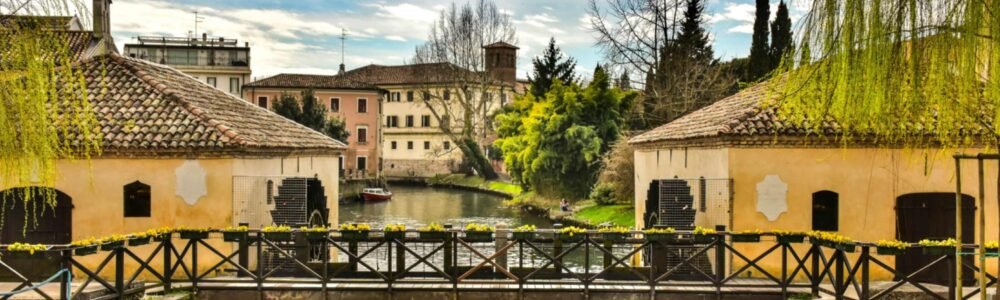
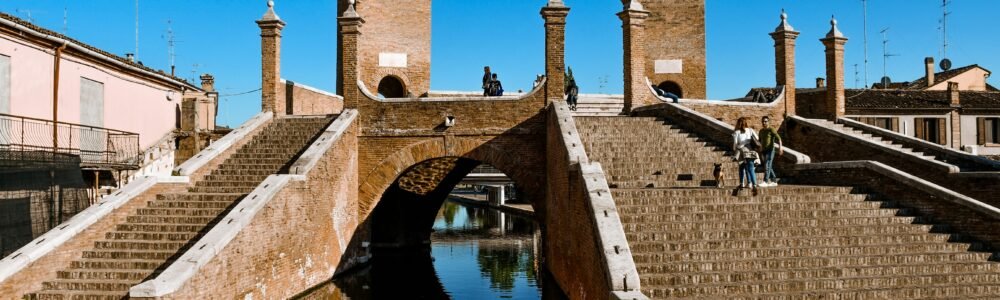
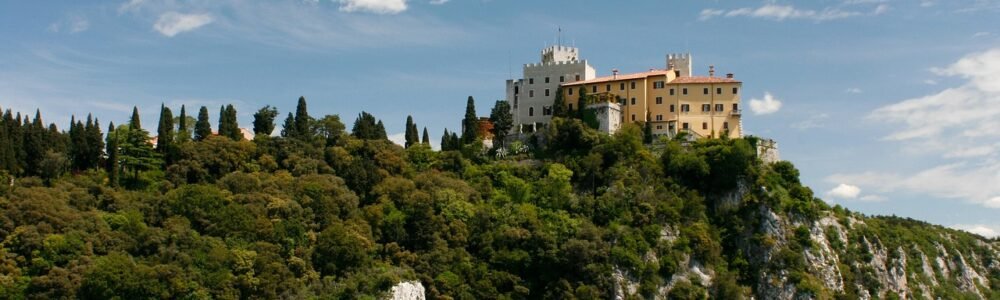
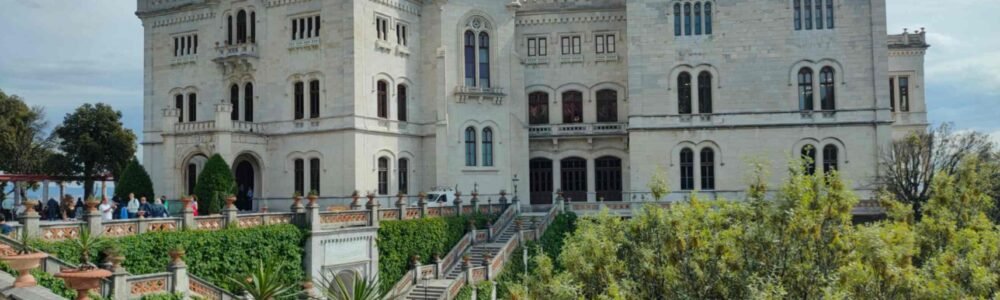
Portogruaro appears relatively early after leaving Verona and works naturally as a first break. Located within the Veneto plain, it provides a convenient pause before continuing east toward the Adriatic side of the route. Further along, Miramare Castle introduces a completely different setting. Positioned on a rocky promontory overlooking the Gulf of Trieste, it marks the transition from inland travel toward the coastal section of the journey. Because it lies close to the route toward Slovenia, it can be included without significant detours.
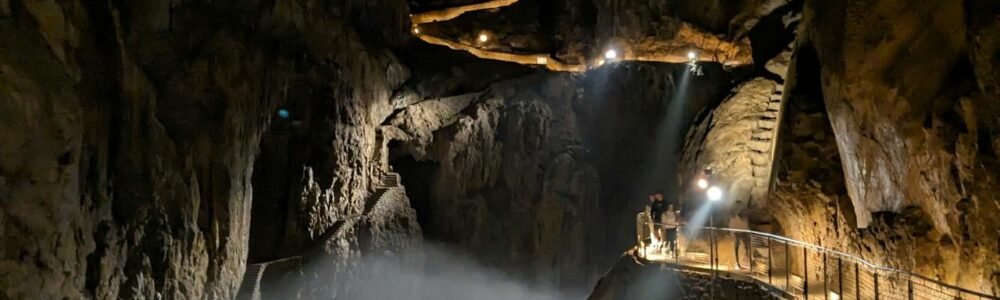
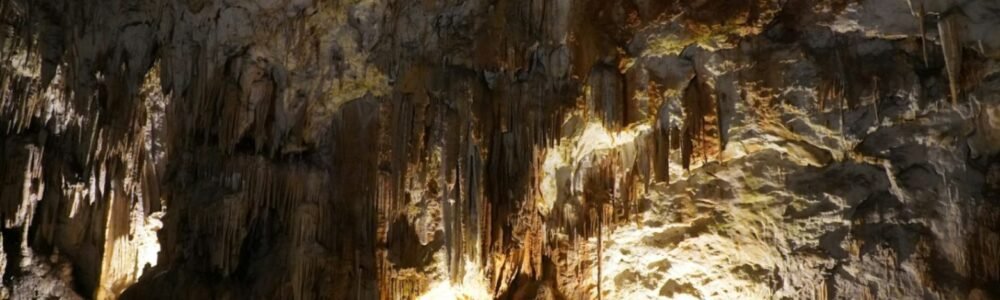
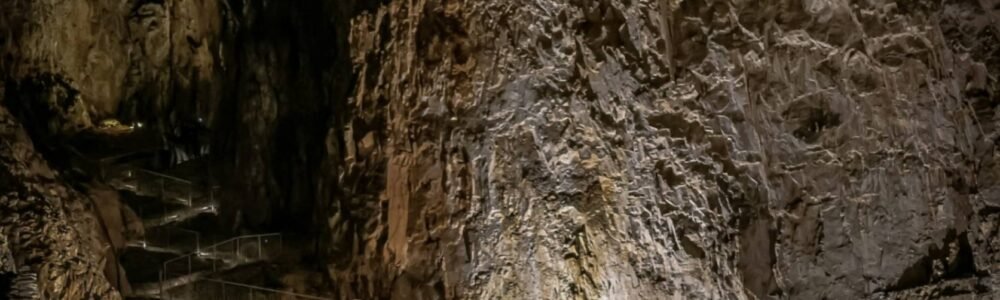
Closer to Ljubljana, the Škocjan Caves provide another distinct stop. Unlike the earlier urban and coastal locations, this area is defined by underground river systems, limestone formations, and the karst landscape that characterizes much of southwestern Slovenia. It offers a final break before continuing toward the capital. These stops are optional and usually brief. They divide the drive into manageable segments while keeping the overall journey efficient. Private transfers are especially useful for families, small groups, travelers with luggage, or anyone wanting a predictable schedule.
Prices generally range between €350 and €550 per vehicle depending on group size.
Distance and realistic travel expectations
The distance between Verona and Ljubljana is approximately 350 kilometers. Under normal conditions, direct road travel usually requires between three and a half and four and a half hours. That estimate remains relatively stable because most of the route follows motorways and major transport corridors. What often changes the total duration is not the distance itself but the number of interruptions introduced into the day. Waiting for train connections, changing stations, or adjusting to fixed bus schedules can add substantial time even when the actual travel distance remains unchanged.
The route itself is easy to follow. After leaving Verona, roads continue east through the Veneto region before approaching Trieste and eventually entering Slovenia. Once the Slovenian motorway network is reached, Ljubljana is only a short distance away. Morning departures generally provide the most flexibility and reduce the likelihood of encountering heavier traffic near larger cities.
Driving by yourself
Driving from Verona to Ljubljana is one of the simplest ways to complete the journey. The motorway network connecting northern Italy and Slovenia is well maintained, clearly signposted, and easy to navigate even for travelers unfamiliar with the region. Most of the drive takes place on major roads designed for long-distance travel. The route remains consistent, requiring very few directional changes. Once outside Verona, the journey settles into a steady rhythm that continues almost all the way to Ljubljana.
Driving time generally falls between three and a half and four and a half hours excluding longer stops. Fuel costs typically range between €30 and €60 depending on the vehicle. Italy uses toll roads, and total toll expenses usually range between €15 and €25 depending on the section used. Slovenia requires a motorway vignette, which generally costs around €16 for a weekly pass. Driving provides flexibility regarding departure times and breaks. Travelers can adjust the pace of the day, choose where to stop, and continue without relying on external schedules. Arrival in Ljubljana is relatively simple because the city connects directly to the national motorway network.
Rail travel between Verona and Ljubljana
Train travel is a viable alternative and is often chosen by travelers who prefer not to drive. Most rail routes require at least one transfer, typically involving connections through major northern Italian cities before continuing toward Slovenia. Depending on schedules, some journeys may require additional changes. The train ride itself is generally comfortable and follows established international rail corridors. Large sections of the route pass through northeastern Italy before approaching the Slovenian border.
Total travel time usually ranges between five and seven hours depending on the connection structure. Ticket prices generally fall between €25 and €80 per person depending on train category and booking date. The rail journey can be relaxing because travelers do not need to focus on navigation or traffic. However, flexibility is lower because departures and transfers are fixed. For travelers with light luggage and flexible schedules, train travel remains a practical option.
Bus connections and travel duration
Long-distance bus services also connect Verona and Ljubljana. Most routes follow a similar corridor to road traffic, moving east through northern Italy before continuing into Slovenia. Depending on the operator, some services are direct while others require a transfer. Journey times generally range between five and seven hours. Ticket prices usually range from €20 to €50 per person.
The primary advantage of bus travel is affordability. The trade-off is longer travel time and less flexibility compared with driving. Bus services can be particularly useful for travelers staying close to central stations and looking for a budget-friendly solution. As with rail travel, departure schedules largely determine how efficient the day feels.
Why flights are rarely worth considering
Flying is generally not practical between Verona and Ljubljana. Although airports exist in both regions, the overall distance is too short for air travel to provide meaningful advantages. By the time airport procedures are completed, much of the potential time saving disappears. Check-in requirements, security screening, boarding procedures, baggage collection, and transfers after landing usually make the total duration comparable to or longer than road travel.
Flights also reduce flexibility because schedules are fixed and often require arriving at the airport well in advance. For these reasons, travelers usually choose road, rail, or bus transport instead.
Comparing the available options
Private transfer offers the most direct journey and removes the need to coordinate schedules.
Driving independently provides flexibility and complete control over timing.
Train travel delivers comfort over longer distances but generally requires one or more transfers.
Bus travel remains the most economical option but increases total journey time.
For most travelers, road travel provides the simplest balance between convenience and efficiency.
Arriving in Ljubljana
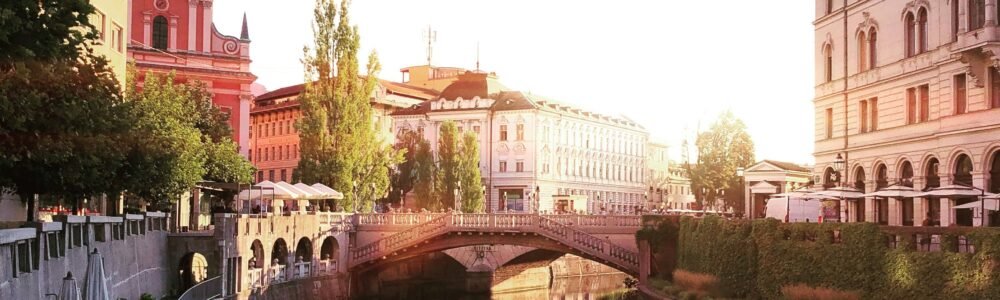
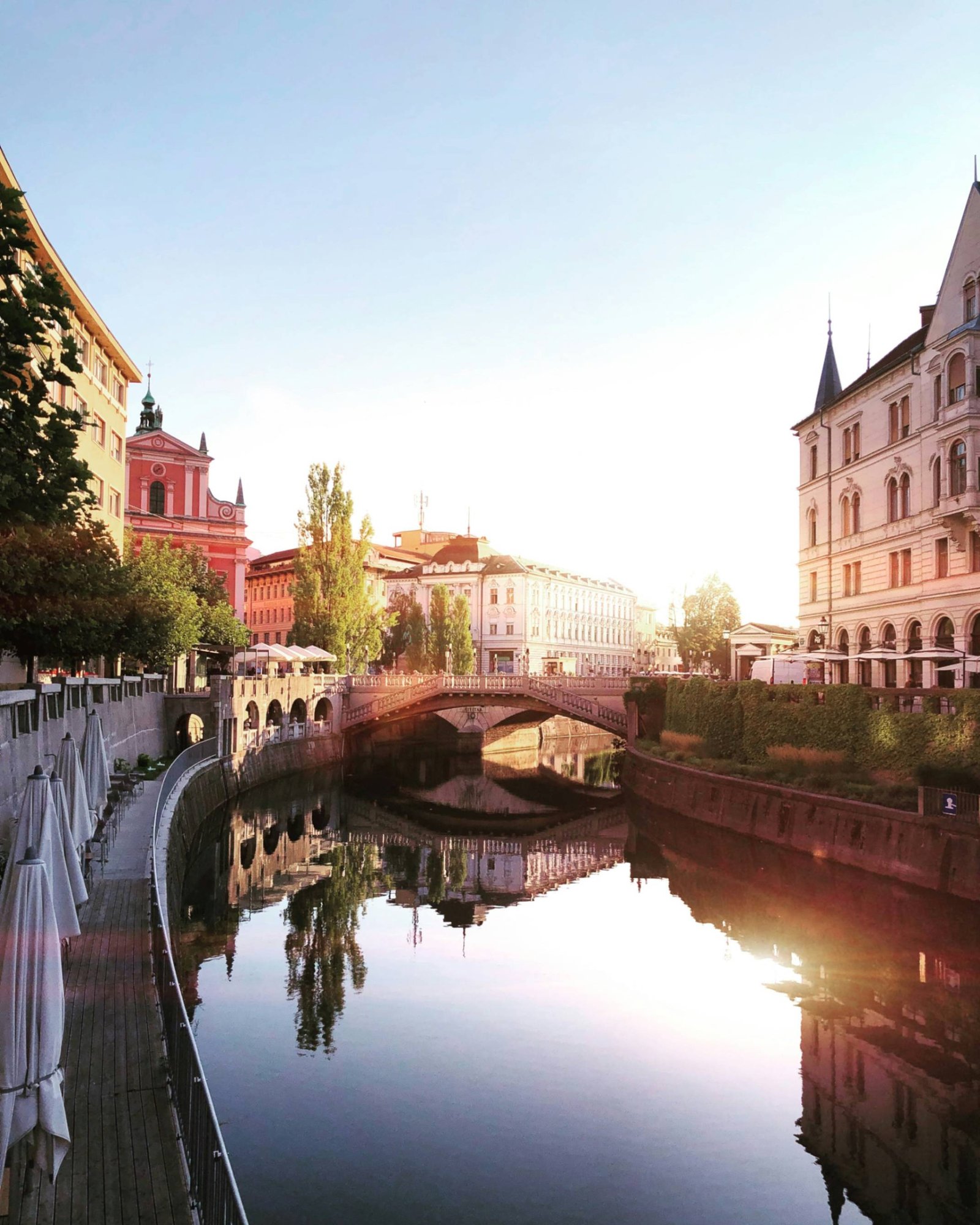
Ljubljana feels very different from Verona despite both cities being relatively easy to navigate. The Slovenian capital is compact compared with many European cities, and much of the center revolves around pedestrian streets, bridges, and the Ljubljanica River. Once you arrive, moving around the central area is straightforward and usually requires little planning.
Many visitors first head toward the old town, where most major attractions, restaurants, and public spaces are concentrated within walking distance of one another. Unlike larger capitals, Ljubljana rarely feels overwhelming. Distances remain manageable, and orientation becomes easy after a short walk through the center. The city’s scale makes it particularly suitable for travelers arriving after several hours on the road.
How many days to spend in Ljubljana
Two nights in Ljubljana are usually enough to explore the central districts and major landmarks without rushing. Three nights allow more flexibility and make it easier to include nearby destinations such as Bled, the Karst region, or other parts of Slovenia. Because the city itself is compact, longer stays are usually motivated by regional exploration rather than the capital alone.
Many travelers use Ljubljana as a base because transport connections to the rest of Slovenia are straightforward and distances remain relatively short. The ideal stay depends more on overall travel plans than on the city itself.
Making the journey as efficient as possible
The route from Verona to Ljubljana is uncomplicated compared with many international transfers. The infrastructure is reliable, the distance is manageable, and multiple transport options are available throughout the year. The most important decision is not how far you need to travel, but how many stages you want to include in the day. Direct travel minimizes delays and keeps the schedule predictable, while additional connections increase flexibility in some cases but extend total journey time.
For most travelers, the route works best when it remains simple and continuous. The cities are close enough that the journey never feels excessive, yet far enough apart that choosing the right transport option makes a noticeable difference.
For official visitor information, city maps, and local updates, click the official Ljubljana tourism website.