How to get from
Bled to Venice
How to get from Bled to Venice
Why this trip feels longer than it looks
On paper, Bled and Venice are not very far apart. The straight-line distance across northern Slovenia toward the Adriatic suggests a fairly short relocation day. What actually shapes the trip is the geography between them. The road corridor leaves the Alpine foothills, crosses the Slovenian Karst plateau, and then approaches the Italian coastline near Trieste before turning west toward the Venetian lagoon.
Because of that layout, the travel day behaves differently depending on how many steps you introduce into it. Continuous road travel feels like a half-day relocation. Routes with train or bus transfers can quietly stretch into most of the day because waiting time between departures becomes the longest part of the journey.
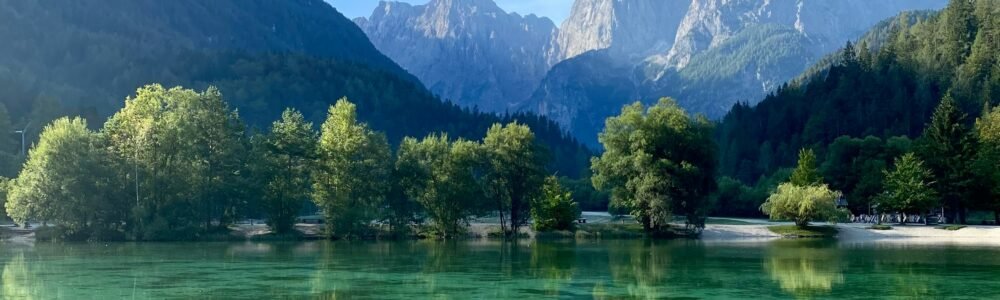
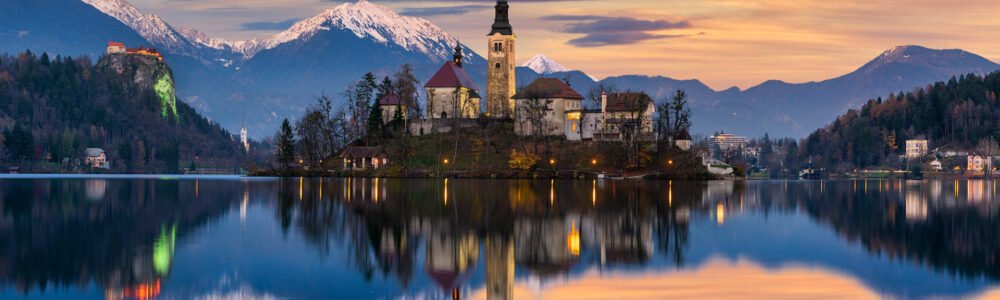
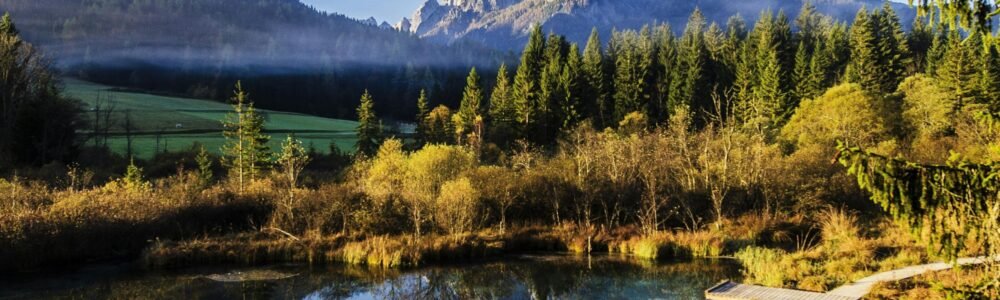
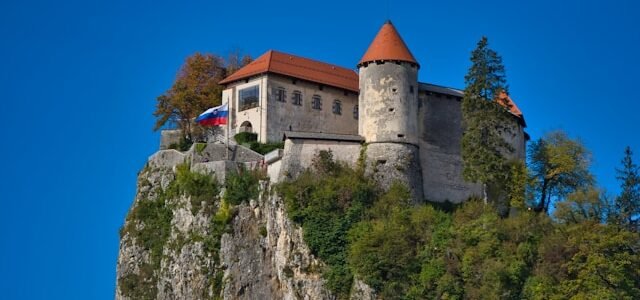
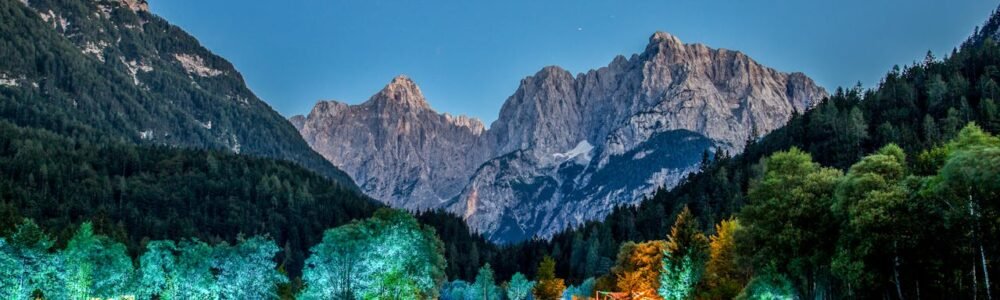
Many travelers reach this route after spending several days around Lake Bled. The lake sits in a compact valley beneath the Julian Alps, and departure mornings often begin slowly with breakfast overlooking the water. Leaving that setting for Venice is not only a change of city but also a shift in landscape and pace.
Within the first hour of driving the mountains begin to fade behind you. The road descends into the wider Ljubljana basin, and the route continues southwest across the Karst region. By the time the Adriatic coastline appears near Trieste, the scenery already feels closer to the Mediterranean than the Alps. That geographic transition is why many itineraries place Bled and Venice next to each other. They represent two distinct parts of the same journey through Central Europe.
Distance and travel time in real conditions
The road distance between Bled and Venice usually falls between 270 and 300 kilometers depending on the exact route used when approaching Italy. Under steady traffic conditions, the drive normally takes between three and a half and four and a half hours.
That timing assumes continuous travel. The moment transfers enter the plan, total travel time begins to grow. Trains and buses may move quickly, but the waiting time between them often becomes the slowest part of the day.
For example, a train segment might take only two hours, but missing a connection can add another hour or more without moving anywhere. When several segments are combined, a trip that could take four hours by road can easily reach six or seven hours.
Morning departures generally produce the best result. Leaving Bled before midday usually places you in Venice during the early afternoon. That timing matters because arriving earlier leaves space to check in, adjust to the city, and explore before evening. Later departures often push arrival into the evening, especially if connections become tighter later in the day.
Private transfer and direct travel
This private transfer turns the journey into a continuous drive from accommodation in Bled to the arrival point in Venice. Instead of coordinating departures, the trip simply begins when you leave the lake area. Driving time usually falls between three and a half and four hours depending on traffic leaving Slovenia and entering Italy. The main difference compared with public transport is that the travel clock never resets. You leave once and arrive once.
This matters most when traveling with luggage. Carrying suitcases through train stations or bus terminals becomes tiring quickly, especially when transfers require moving between platforms or different terminals. With a single vehicle, luggage stays where it is until the end of the trip. The drive also passes several locations that naturally break the journey.
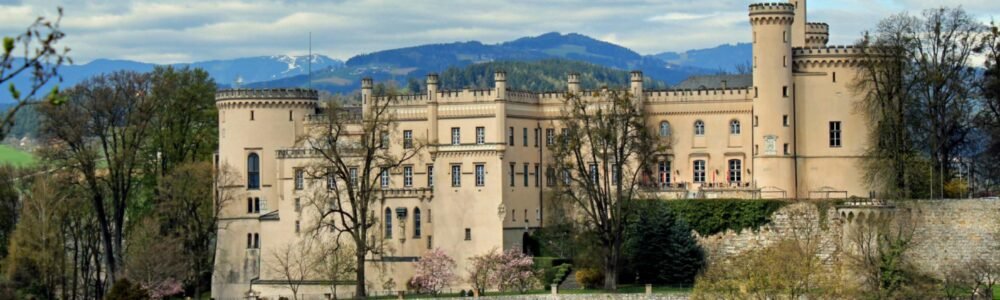
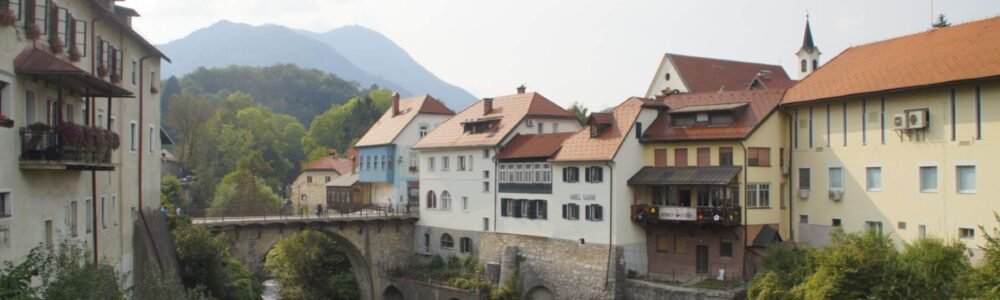
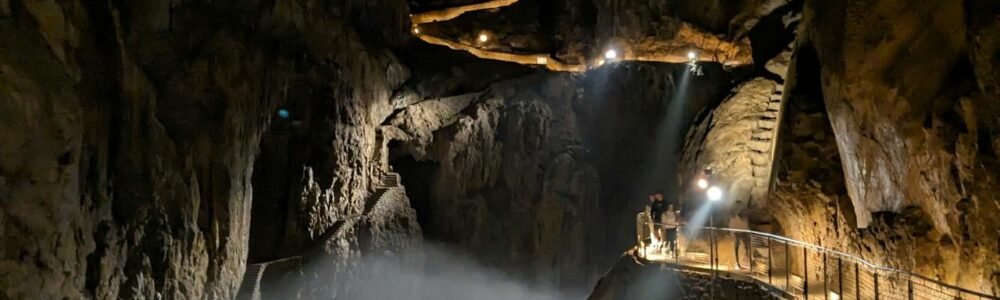
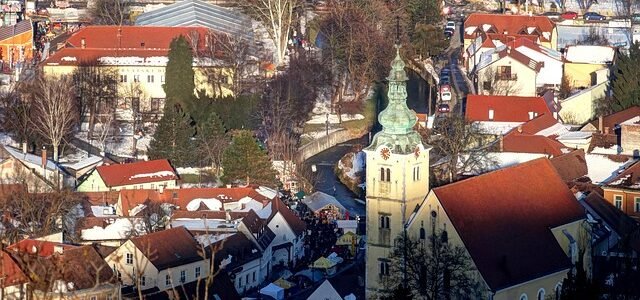
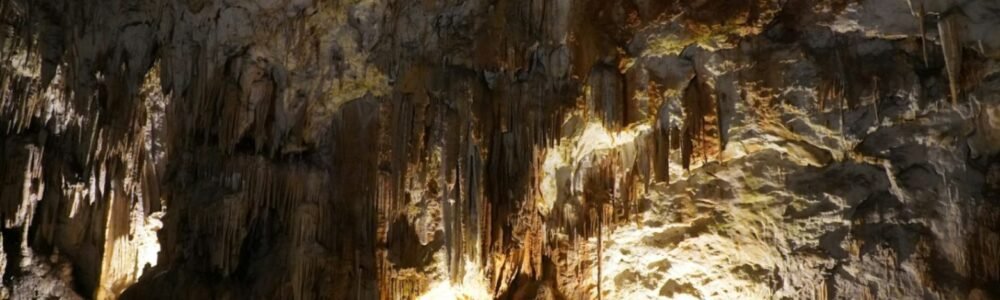
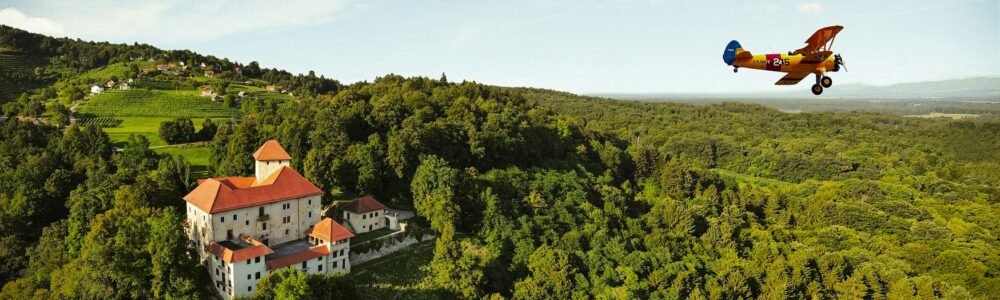
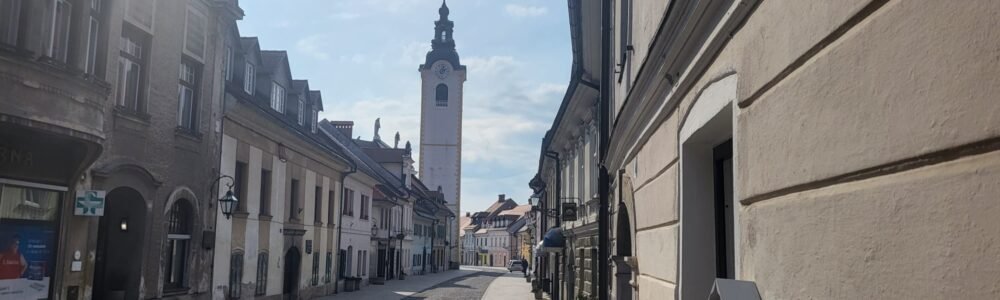
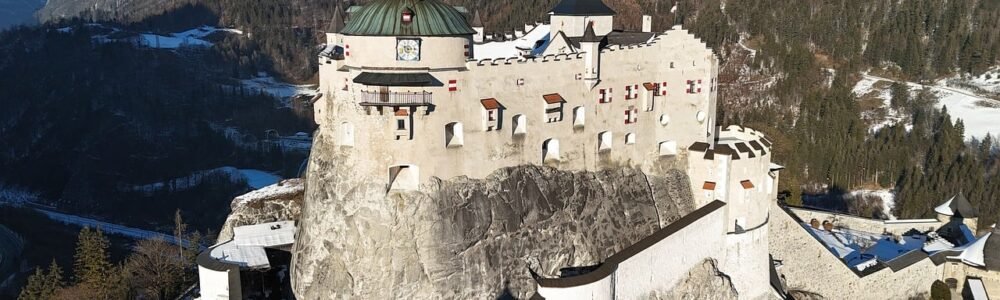
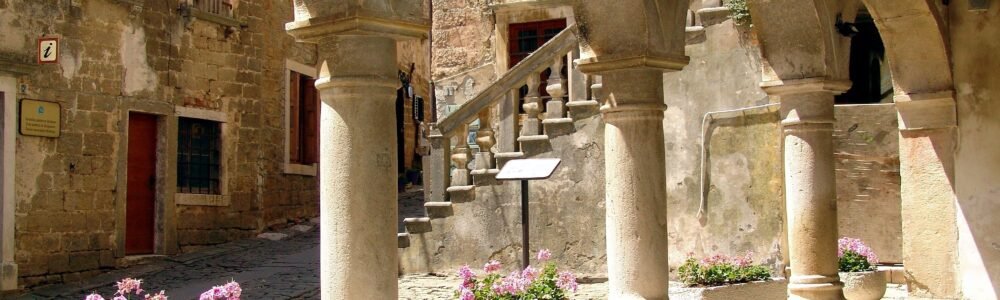
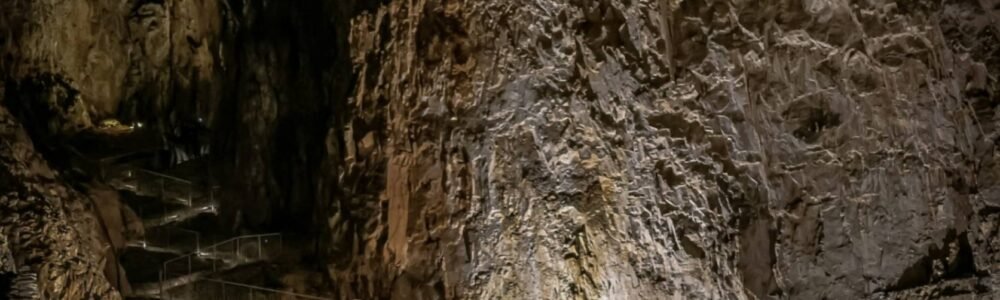
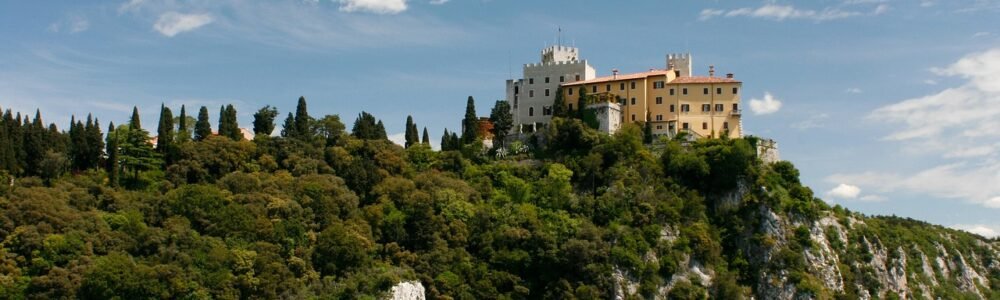
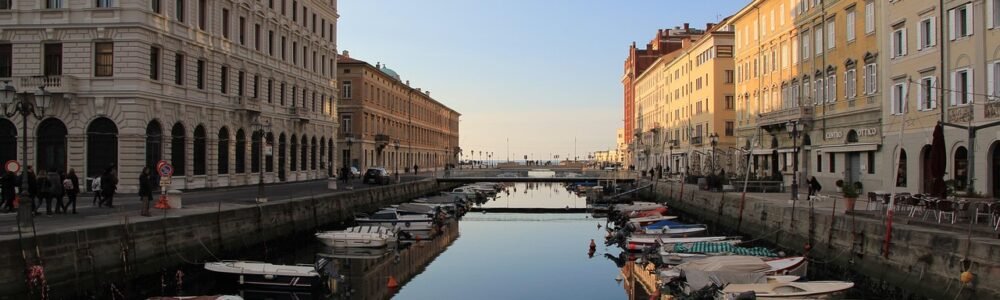
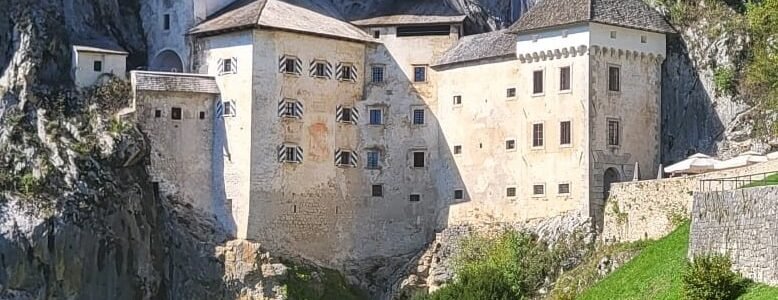
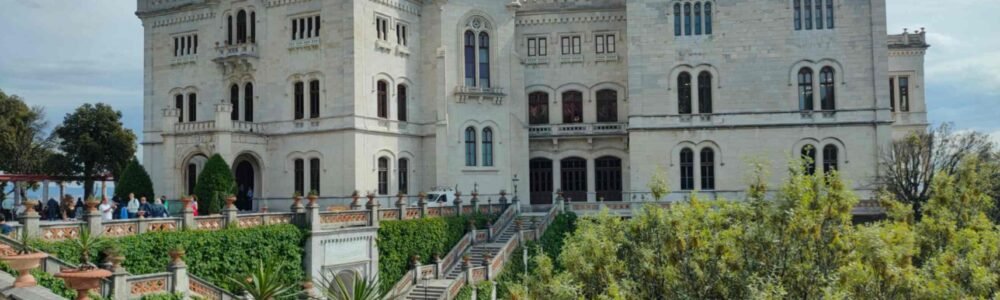
Škofja Loka appears early in the route between Bled and Ljubljana. The town’s historic center lies beneath a small castle hill and provides an easy stop for a short walk through a traditional square before continuing south. Further along the Karst region stands Predjama Castle, built dramatically into the entrance of a cave. The castle rises from a limestone cliff and sits slightly off the main highway route but remains close enough for a quick visit. Closer to the Italian border lies Miramare Castle near Trieste. The white castle overlooks the Adriatic coastline and sits directly along the natural approach toward Venice.
These stops are usually brief and simply divide the drive into comfortable segments.
Private transfers are particularly practical for families, travelers carrying several suitcases, or visitors who prefer not to plan around transport timetables. Vehicles are air conditioned and sized according to group size, and Wi-Fi is commonly available. Prices typically range between €330 and €480 per vehicle depending on passenger number.
Driving yourself
Driving the route yourself follows the same general corridor as private transfers but places the entire journey under your control. The drive begins by leaving Bled toward the Ljubljana basin. Traffic near the lake is normally light during the morning, and the road quickly reaches the motorway network. From there the route continues west through Slovenia toward the Italian border near Trieste before turning along the motorway system that leads toward Venice.
Driving time usually falls between three and a half and four and a half hours depending on traffic and short stops. Summer weekends sometimes extend travel time slightly because many vehicles move toward coastal destinations during the same period.
Fuel costs for the distance usually range between €35 and €60 depending on the car and current fuel prices. Slovenia requires a motorway vignette for highway travel. Weekly vignettes usually cost about €16 and most rental cars already include one. After entering Italy, motorway tolls generally add about €15 to €25 depending on entry and exit points.
Parking in Venice requires planning because vehicles cannot enter the historic city center. Drivers typically park at Tronchetto Island or Piazzale Roma and continue toward accommodation on foot or by vaporetto. Driving works best for travelers who plan to continue exploring Italy afterward, since the car remains useful during the rest of the trip.
Train travel
Train travel between Bled and Venice involves several segments because Bled itself is not located on a major international rail line. Most journeys begin at Lesce-Bled or Jesenice station, both a short drive from the lake. From there trains travel toward Ljubljana before connecting to rail services heading west toward Italy.
The train journey through northern Slovenia is often the most scenic part of the day. Tracks pass through valleys and forests before gradually entering the flatter Karst landscape. Total travel time usually falls between five and seven hours depending on transfer timing.
Ticket prices typically range between €30 and €70 per person depending on the train services used and how early tickets are purchased. The trains themselves are comfortable. The main effort during the day comes from coordinating transfers and moving luggage between stations. For travelers carrying light luggage and comfortable navigating train platforms, this option works well.
Bus travel
Bus routes between Bled and Venice generally require at least one transfer, often in Ljubljana. The first segment travels from Bled toward the Slovenian capital before continuing west toward Italy. Total travel time normally ranges between six and eight hours depending on waiting periods between buses.
Ticket prices usually fall between €30 and €65 per person depending on the operator and booking time. The ride itself is typically comfortable. The challenge lies mainly in timing. If the connection schedule aligns well, the day moves smoothly. If not, waiting between departures becomes the longest part of the journey.
For travelers on a tighter budget, buses remain a workable option, though they require more patience than direct road travel.
Flights
Flights are rarely used for travel between Bled and Venice. The distance between the two destinations is relatively short, and neither city requires air travel to connect efficiently. Even if a flight existed from a nearby airport, travelers would still need to reach the airport early, pass security procedures, and then travel again from the arrival airport to Venice.
When all these steps are included, the total journey usually becomes longer than traveling by road. Because of this, flights are almost never considered for this route.
Which option is best
Private transfer offers the fastest door-to-door travel time.
Driving gives independence and flexible departure timing.
Train travel is comfortable but requires transfers.
Bus travel usually costs less but takes longer overall.
For most travelers relocating between Slovenia and Italy, continuous road travel keeps the day simplest.
Arrival in Venice
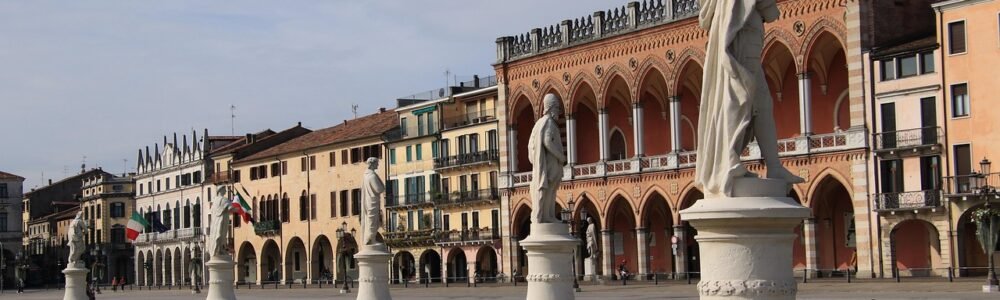
Arrival in Venice feels different from arrival in most cities. Cars stop at the edge of the historic center, and from that point onward the city becomes a network of canals and pedestrian streets. Most visitors reach Piazzale Roma or Tronchetto before continuing toward their accommodation on foot or by vaporetto.
The first walk through Venice often becomes the highlight of the arrival day. Narrow streets open into quiet squares, bridges cross small canals, and the sound of water replaces traffic noise. Even without a plan, walking beside the canals quickly reveals the rhythm of the city.
How long to stay
Two nights in Venice allow enough time to see the main landmarks and explore the central districts. Three nights create a more relaxed pace and allow visitors to explore quieter neighborhoods beyond the busiest tourist routes.
Many travelers also include nearby islands such as Murano or Burano as half-day trips, which becomes easier when staying slightly longer.
Closing notes for this journey
Traveling from Bled to Venice is not complicated once the transport choice is decided in advance. The distance itself is moderate, but the structure of the journey determines whether the day feels quick or extended. Continuous road travel keeps the trip simple and predictable. Routes with multiple connections require more coordination but remain entirely possible.
With an early departure from Bled, travelers can reach Venice in the afternoon and still have time to begin exploring the city the same day.
Additional maps, visitor details, and seasonal updates are available on the official Venice tourism website.